
Protecting your strength. Supporting your future. Bone health is easy to overlook, until it isn't. At BCHC, bone density screening is about more than a test. It's about identifying risk early, preventing fractures, and helping you stay active and independent as you age.
We've provided bone densitometry services in Bermuda for over two decades, and in 2022 we invested in upgraded technology to ensure you continue to receive accurate, reliable, and modern diagnostic care close to home.
.jpg)
Doctor referrals are required for these appointments. Speak with your physician about making an appointment at Bermuda Cancer and Health Centre. Patients with electromagnetic medical devices should avoid Bone Density scans.
Bone density testing may be right for you if:
Bone density testing, also known as a Bone Mineral Density (BMD) scan, measures the strength of your bones and helps assess your risk of osteoporosis and fractures.
Why it matters: Osteoporosis often develops silently, without symptoms, until a fracture occurs. Women are four times more likely than men to develop osteoporosis, particularly after menopause. That's why early screening matters.
The scan itself is:
Early detection gives you options. And options give you control.
Before your scan Your doctor will refer you for bone density testing. When you schedule your appointment, we'll ask about any implanted medical devices and provide specific preparation instructions if needed.
During your scan You'll lie comfortably on a padded table while a scanning arm passes over your body, typically measuring your spine and hip. The scan takes just a few minutes and is completely painless. You'll need to remain still, but you can breathe normally throughout.
After your scan Your results will be sent to your doctor, who will discuss what they mean and whether any follow-up is needed. Results are typically expressed as a T-score, which compares your bone density to that of a healthy young adult.
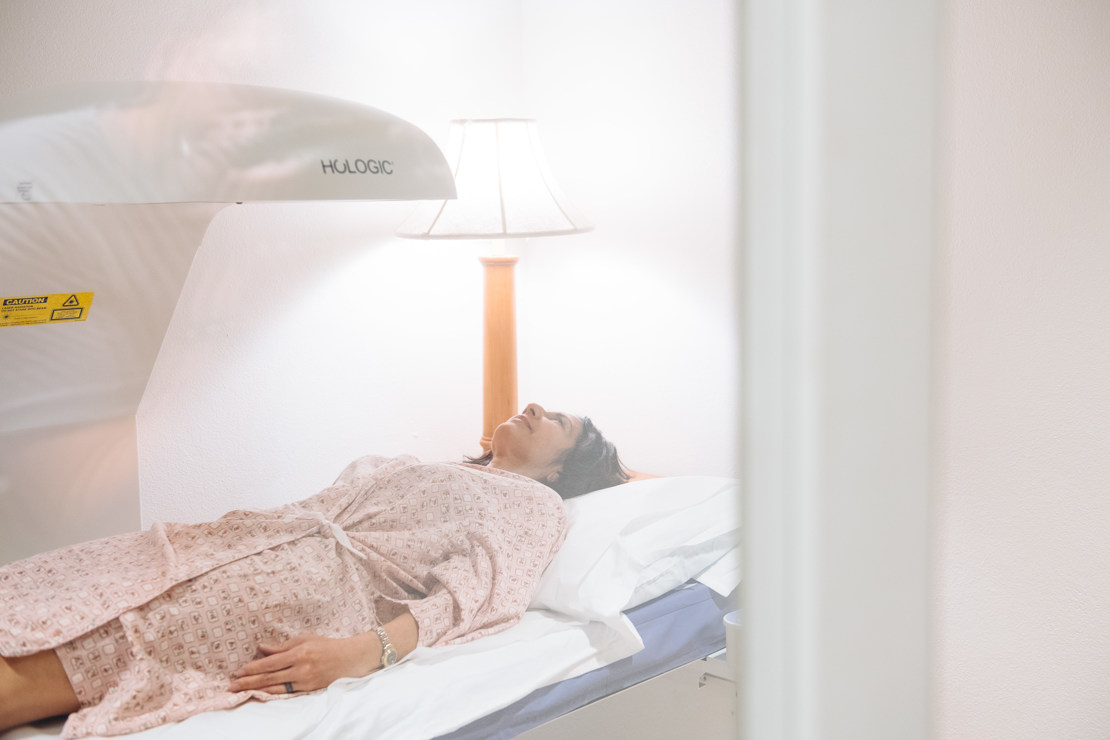
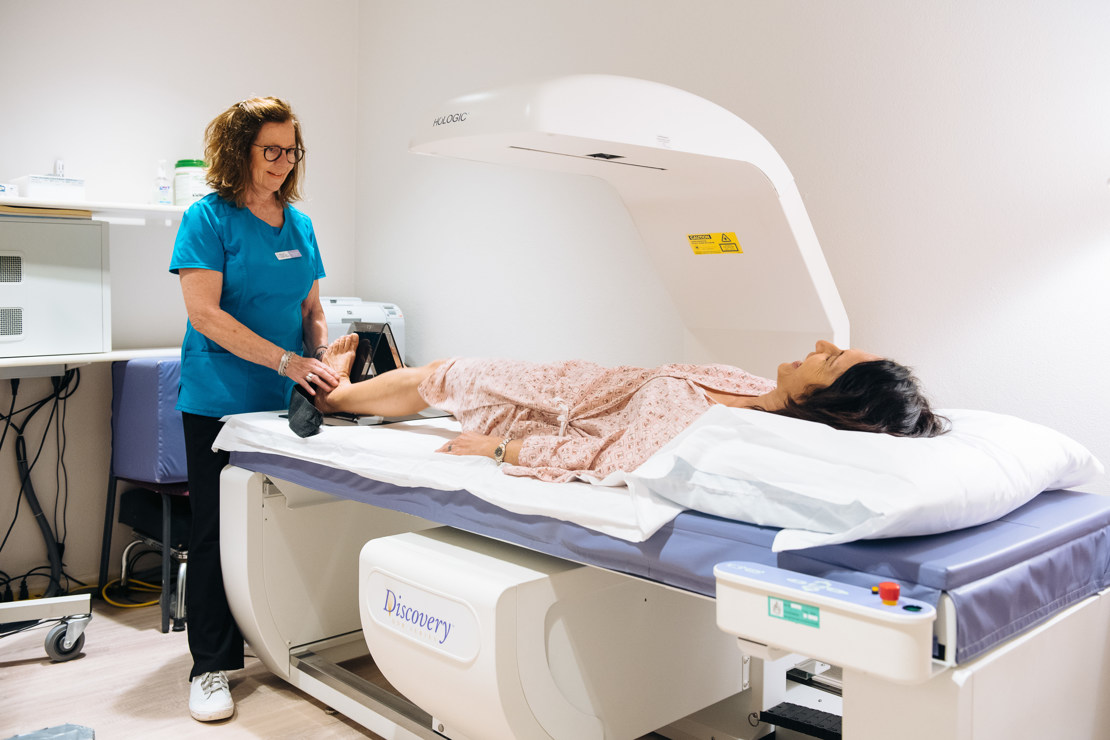
Your bone density scan is performed by registered technologists trained in densitometry using modern, upgraded equipment. Your results are interpreted by experienced radiologists who work closely with your physician to ensure you receive appropriate follow-up care.
Patients with certain implanted electromagnetic medial devices should not undergo bone density scanning. Our team will review all referrals to ensure your safety. Please inform us of any implanted devices when scheduling your appointment.
Your health insurance will cover a portion of the cost of this service. In keeping with our commitment to accessible care, the Centre does not charge a co-pay. Donations towards your balance are always appreciated and help support others in need.
If you're uninsured or underinsured, the balance of your service will be subsidised by our Equal Access Fund, ensuring that financial barriers do not stand in the way of essential diagnostic care.
How often should I have a bone density scan? This depends on your initial results and risk factors. Many women have their first scan around menopause and repeat testing every 2-5 years, or more frequently if bone loss is detected. Your doctor will recommend the right schedule for you.
Do I need to do anything special to prepare? Generally, no special preparation is needed. Wear comfortable clothing without metal zippers or buttons in the scan area. Your doctor may ask you to stop taking calcium supplements for 24 hours before the scan.
Is there radiation exposure? Yes, but it's very low—about one-tenth the radiation of a standard chest X-ray. The benefits of early detection far outweigh this minimal exposure.
What do the results mean? Results are given as a T-score:
Your doctor will explain what your specific results mean for you.
What happens if osteoporosis is found? If your scan shows bone loss, your doctor will discuss treatment options, which may include medication, calcium and vitamin D supplementation, weight-bearing exercise, and lifestyle modifications. Early treatment can significantly reduce fracture risk.
Can men get osteoporosis too? Yes. While women are at higher risk, men can also develop osteoporosis, particularly after age 70 or with certain risk factors. Your doctor can determine if screening is appropriate.