The most common cancer. The most preventable cancer. Skin cancer is the most frequently diagnosed cancer worldwide, but it's also one of the most preventable.
When caught early, most skin cancers are highly treatable, with cure rates exceeding 98%. The key is knowing how to protect yourself, recognising warning signs, and understanding that everyone is at risk, regardless of skin tone.
Bermuda has a higher incidence rate of skin cancer than worldwide averages. Our island lifestyle, more time outdoors, intense UV exposure year-round, proximity to the equator, means greater risk for everyone who lives here.
The dangerous myth: "Dark skin doesn't get skin cancer."
The truth: No one is immune.
While darker skin contains more melanin, which provides some natural protection from UV radiation, it does not provide complete immunity. In fact, when skin cancer develops in people with darker skin, it's often detected at later stages, partly because of the widespread misconception that it "doesn't happen to us."
_1110.jpg)
With 70% of Bermuda's population having darker skin, we must challenge the dangerous myth that "Black and brown skin doesn't need sun protection or skin checks."
Everyone in Bermuda should:
Sun safety and skin awareness aren't just for fair-skinned people. They're for everyone who calls Bermuda home.
Most common type — Accounts for about 80% of all skin cancers
What it looks like:
Where it appears: Usually on sun-exposed areas—face, ears, neck, scalp, shoulders, back
Treatment outlook: Highly treatable when caught early; rarely spreads to other parts of the body
Second most common — Accounts for about 20% of all skin cancers
What it looks like:
Where it appears: Sun-exposed areas: face, ears, neck, lips, hands, arms, legs
Treatment outlook: Usually curable when detected and treated early; can spread if left untreated
Most dangerous, but less common — Accounts for only about 1% of skin cancers but causes the majority of skin cancer deaths
What it looks like:
Where it appears:
Treatment outlook: Highly curable when caught early; can spread rapidly to other organs if not detected and treated promptly
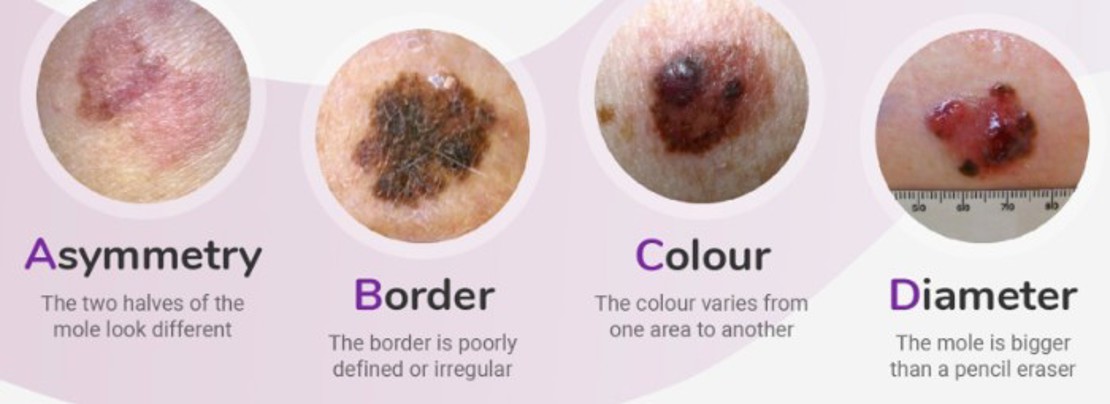
Early detection saves lives. Monthly self-exams help you become familiar with your skin so you can notice changes quickly.
Monthly, choose the same day each month (e.g., the first Sunday) to make it a habit
1. Face and scalp Examine your face, ears, neck, chest, and belly. Part your hair or use a blow dryer to check your scalp. Ask a partner to check areas you can't see, or use a hand mirror.
2. Arms and hands Raise your arms, looking at the fronts, backs, and sides. Check between your fingers, under fingernails, and on your palms.
3. Underarms and sides Raise your arms and check your underarms and both sides of your torso.
4. Back and buttocks Use a hand mirror to check the back of your neck, shoulders, upper and lower back, buttocks, and the backs of your legs.
5. Legs and feet Sit down and check the fronts, backs, and sides of your legs. Check your feet thoroughly—tops, soles, between toes, toenails, and under toenails.
6. Genitals Use a hand mirror to check your genital area.
For people with darker skin, pay extra attention to:
Don't panic, but don't wait.
Remember: Most skin changes are not cancer, but only a doctor can tell for certain. Early evaluation is always better than waiting.
Prevention is the most powerful tool against skin cancer. Follow these five simple steps every day:
1. SLIP on sun-protective clothing
Wear long sleeves, long trousers, or UV-protective clothing when possible. Dark or bright colours offer more protection than pastels.
2. SLOP on SPF 30+ broad-spectrum sunscreen
Apply generously 20 minutes before going outside. Reapply every 2 hours, or more often if swimming or sweating. Don't forget ears, neck, hands, and feet.
3. SLAP on a wide-brimmed hat
Choose a hat with at least a 7.5cm brim all around. Baseball caps don't protect your ears or neck.
4. SEEK shade, especially between 10am and 4pm
UV radiation is strongest during midday hours. Plan outdoor activities for early morning or late afternoon when possible.
5. SLIDE on UV-protective sunglasses
Choose sunglasses that block 99-100% of UVA and UVB radiation. Wrap-around styles offer the best protection.
Check Bermuda's UV Index daily: View today's reading
Learn more about our SunSmart Programme
See a doctor promptly if you notice:
Don't wait. Early detection dramatically improves treatment outcomes. Most skin cancers are highly curable when caught early.
For people with darker skin: If you have any unusual spots on your palms, soles, under nails, or inside your mouth, especially if they're changing or not healing—see a doctor right away. These are common locations for melanoma in darker skin tones.
Want to learn more about skin cancer prevention and early detection? We offer free presentations for schools, workplaces, community organisations, and groups.
Our presentations cover:
Questions? Call 441-236-1001 or email sunsmart@chc.bm