
Learning you or someone close to you has been diagnosed with multiple myeloma can bring many questions. This page provides an overview of multiple myeloma, how it develops, how it is diagnosed and the care and support available.
Multiple myeloma is a type of cancer that starts in plasma cells, which are found in the bone marrow - the soft, inner part of some bones. Plasma cells are a type of white blood cell that help fight infections by making antibodies that identify and attack germs.
When plasma cells grow out of control and become cancer cells, they can form a tumour, usually in a bone. When there is only one plasma cell tumour, it is called a solitary plasmacytoma. When there is more than one plasma cell tumour, it is called multiple myeloma.
Multiple myeloma develops when plasma cells become abnormal and begin to grow and multiply out of control.
Plasma cells are a type of white blood cell found in the bone marrow. They are part of the immune system and help protect the body from infections by producing proteins called antibodies, also known as immunoglobulins. These antibodies help the body identify and fight germs.
When plasma cells become cancerous, they can produce an abnormal type of antibody. This is known by several names, including monoclonal immunoglobulin, monoclonal protein (M-protein), M-spike or paraprotein.
As the abnormal plasma cells continue to grow, they can build up in the bone marrow and interfere with the production of healthy blood cells.
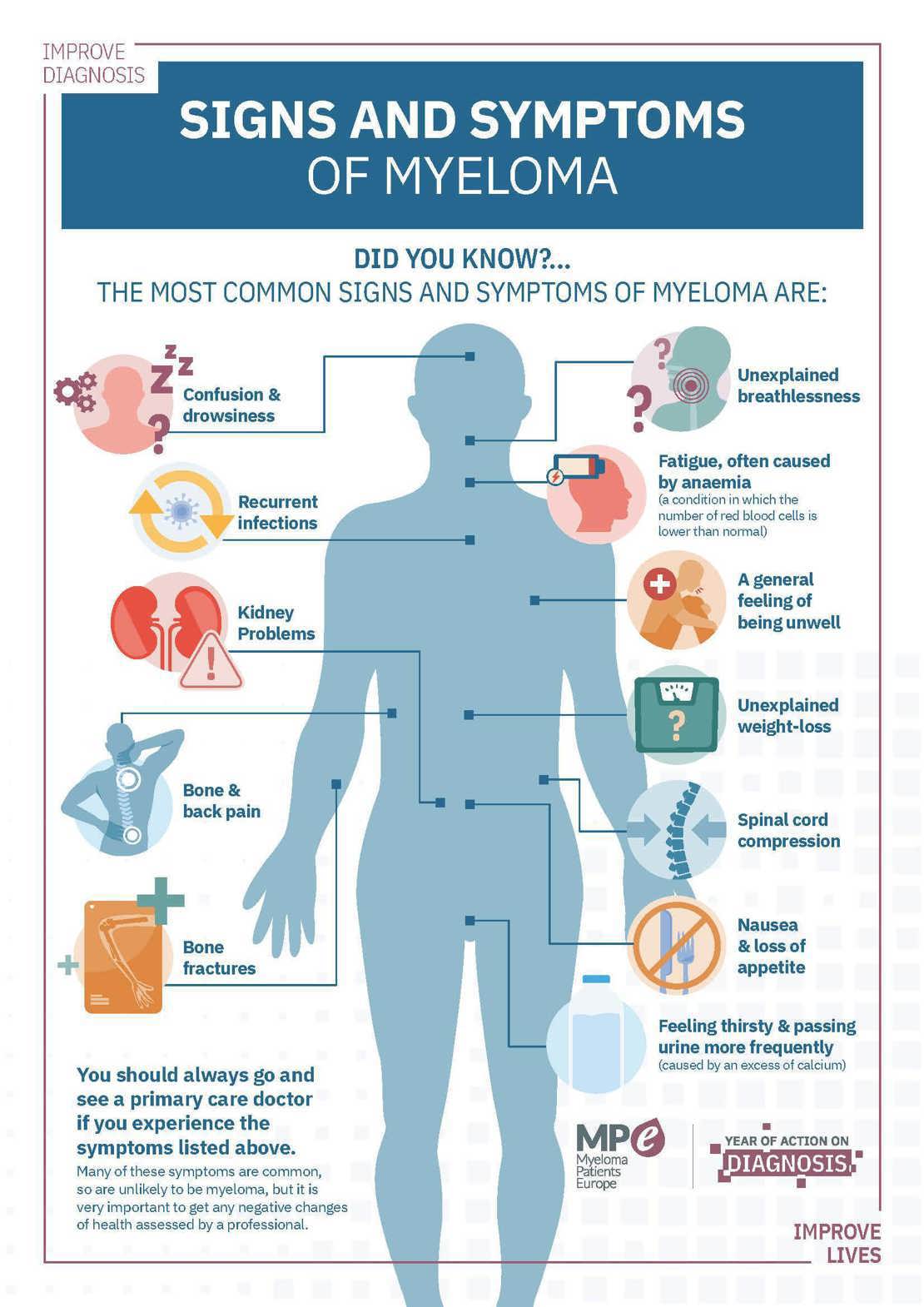
Information and resources for people who have been diagnosed with multiple myeloma.
Learn more about multiple myeloma, including key facts and statistics.
Explore risk factors and what is currently known about the causes of multiple myeloma.
Learn how multiple myeloma may be detected, diagnosed and staged.
Find information about treatment options and possible side effects.
Resources for life after treatment, including follow-up care & ongoing support.